

Burrs, Beans, and Basslines: How to Master Your Manual Coffee Grinder
Let’s be honest: your morning routine is the bassline of your entire day. If the rhythm is off, nothing else feels quite right. You wouldn't listen to a scratchy, skipping record, so why are you settling for a cup of coffee that tastes like a "best of" collection of bitter mistakes?
At Jo Newman’s Brew Coffee Company, we believe that the journey to the perfect cup starts long before the water hits the grounds. It starts with the grind. Specifically, the manual grind. There’s a certain "functional luxury" in taking two minutes to manually transform high-quality coffee beans into a fragrant powder. It’s tactile, it’s aromatic, and: when done right: it’s the secret to unlocking the complex soul of your brew.
But why go manual? And how do you master the art of the click? Grab a seat, put on some Miles Davis, and let’s talk shop.
The Sensory Symphony: Why Manual Grinding Hits Different
There is a visceral, almost meditative quality to using a manual coffee grinder. While electric grinders hum with a clinical, industrial buzz, a manual grinder sings. You feel the resistance of the beans as they meet the burrs. You hear the rhythmic crunch-crunch-crunch: the percussive heartbeat of your kitchen.
And then, there’s the aroma.
When you grind by hand, you are the first person to witness the release of those volatile oils and gases. The scent of toasted hazelnut, dark chocolate, or bright citrus doesn't just fill the room; it invites you into the ritual. By the time you’ve finished your work, you’ve earned that first sip. It’s not just caffeine; it’s a reward for the effort.

Burrs vs. Blades: The Battle for Consistency
If you’re still using a blade grinder: those little spice-chopper lookalikes: we need to have a serious talk.
Imagine trying to cut a steak with a lawnmower. That’s what a blade grinder does to your specialty coffee. It spins at high speeds, smashing the beans into a chaotic mix of "fines" (microscopic dust) and "boulders" (giant chunks).
The result? A muddled, disappointing cup. The dust over-extracts instantly, giving you bitterness. The boulders under-extract, leaving you with sour, thin flavors.
This is where the best burr grinders earn their keep. A precision coffee grinder uses two abrasive surfaces: the burrs: to crush the beans to a uniform size. You aren't just hacking away; you are engineering the exact surface area needed for water to extract the flavor evenly.
The Burr Advantage:
- Uniformity: Every grain is the same size, ensuring a balanced extraction.
- Heat Management: Blades generate heat that can "pre-cook" your delicate oils. Burrs stay cool, keeping the flavor in the bean.
- Repeatability: Once you find your "sweet spot," you can return to it every single morning.

Dialing It In: The Art of the Click
Mastering your coffee brewing equipment means understanding that there is no "one size fits all" setting. Every brew method requires a different beat. Most manual grinders use a "click" system to adjust the distance between the burrs.
Here is your quick-start guide to dialing in your Jo Newman’s Brew Coffee Company experience:
1. The French Press (Coarse & Bold)
For a French Press, you want a grind that looks like sea salt. If it’s too fine, your plunger will be impossible to push, and your coffee will taste like a burnt cigarette. Too coarse? It’ll be watery. Aim for a wide, open setting on your burrs to allow for that long, four-minute steep.
2. The Pour-Over (Medium-Fine & Elegant)
This is where precision really shines. You want a texture similar to table salt or granulated sugar. If the water drains through the paper in less than two minutes, go finer. If it takes five minutes and tastes like ash, coarsen it up. Check out our guide on choosing the right coffee grinder for a deeper dive into these mechanics.
3. The AeroPress (Fine & Punchy)
The AeroPress is the jazz fusion of the coffee world: it works with almost anything. However, a fine-to-medium-fine grind (like fine cornmeal) usually hits that sweet spot of pressure and speed.
The Perfect Partner: Premium Beans
You can have the most expensive precision coffee grinder in the world, but if you’re feeding it stale, supermarket beans, you’re just polishing a turd.
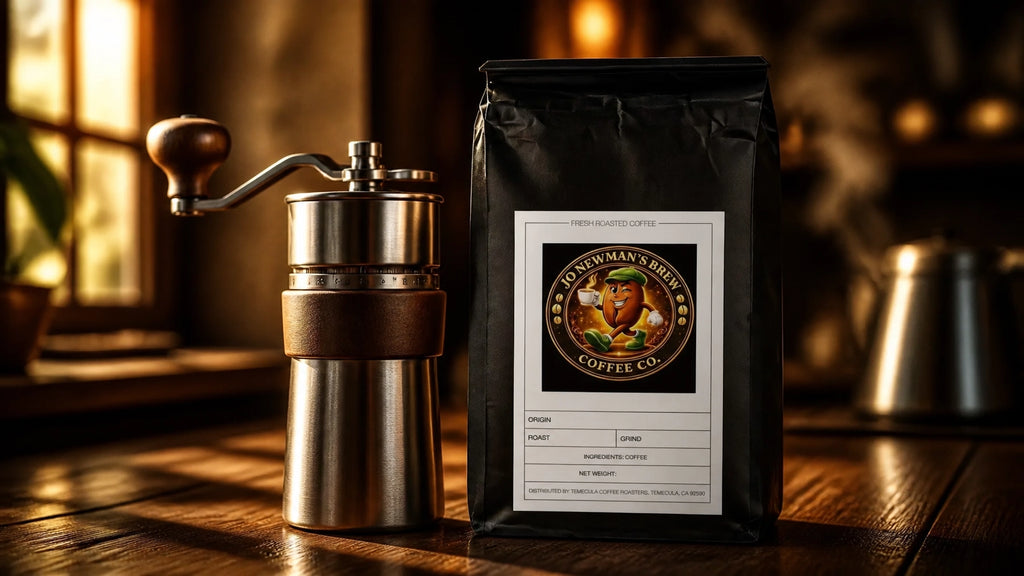
Quality matters. At Jo Newman’s Brew Coffee Company, we source high-quality coffee beans that are roasted in small batches to ensure they reach you at the peak of their flavor profile. Look for our signature matte black bags: the ones with the cheerful "Jo Bean" mascot on the label.
Whether you’re grinding our Signature Blends or a single-origin roast, the freshness is non-negotiable. Freshly roasted beans are full of CO2, which creates that beautiful "bloom" when you pour the water. If your coffee doesn't bubble and expand, it’s old news. Read more about why fresh roasting is the gold standard.

Mastering Your Morning: Pro-Tips for Manual Grinders
Ready to take your ritual to the professional level? Keep these three rules in mind:
- Keep it Clean: Coffee oils can go rancid. Every few weeks, disassemble your grinder and brush out the old dust. Your future self will thank you.
- Weigh, Don't Guess: Investing in a small digital scale is the single best way to improve your coffee. Aim for a 1:16 ratio: roughly 15g of coffee for every 240g of water.
- The Freshness Window: Try to grind your beans right before you brew. Within fifteen minutes of grinding, the aromatic intensity drops off a cliff.

Join the Ritual
The "daily grind" shouldn't be a chore. It’s an invitation to slow down, to engage your senses, and to treat yourself to the quality you deserve. By switching to a manual coffee grinder, you’re taking control of your morning. You’re deciding that "good enough" isn't good enough anymore.
Are you ready to find your rhythm?
Explore our selection of high-quality coffee beans and the latest in coffee brewing equipment. Let’s make your next cup the best one yet.
The result? A morning that feels less like a hurdle and more like a headliner.
Stay bold,
The Team at Jo Newman’s Brew Coffee Company
Related post
19
Jul
Fresh Off The Press! A blog for Coffee and Tea Enthusiasts
Best Coffee Gifts from Louisiana: NOLA-Inspired Presents for Coffee Lovers
Read more
19
Jul
Fresh Off The Press! A blog for Coffee and Tea Enthusiasts
Coffee-to-Water Ratio: Your Cheat Sheet for the Perfect Cup Every Time
Read more
19
Jul
Fresh Off The Press! A blog for Coffee and Tea Enthusiasts
Coffee-to-Water Ratio: Your Cheat Sheet for the Perfect Cup Every Time
Read more
16
Jul
Fresh Off The Press! A blog for Coffee and Tea Enthusiasts
Why Specialty Coffee Will Change the Way You Start Your Day
Read more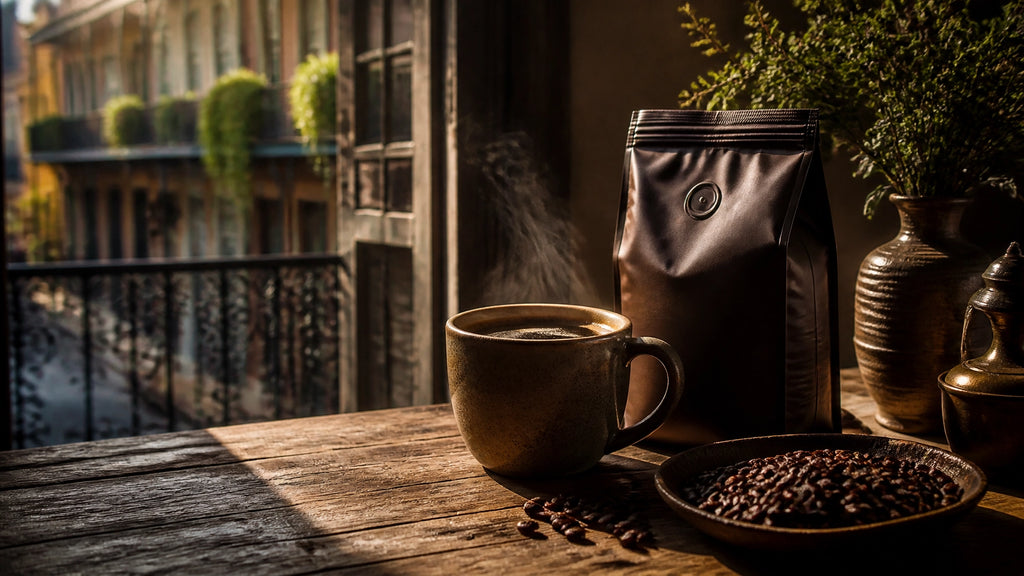
13
Jul
